

by Dr. Irina Negrea
The first in a two-part series, this post discusses the critical need for data literacy in higher education, vital in our AI-driven, “datafied” society. It highlights how data-driven decision-making often creates a deceptive sense of objectivity, concealing inherent biases and inequalities. College writing can be the interdisciplinary space that transforms students into ethical agents in an age when personal information becomes machine-readable data processed by algorithms. The post advocates for rhetorical agency and ethical data storytelling. Ultimately, the goal is to promote data-fluent, compassionate citizens capable of critical analysis and positive change in a data-saturated world.
I recently tried out an exercise called “My Vector” by Gemini Enterprise to better understand how my personal information could be translated into data. After I prompted it, Gemini asked me six short questions designed to gather personal attributes. These questions included various data points, such as my age and daily screen time; whether I identify as a Morning Lark, Night Owl, or Hummingbird; what my primary motivation is (Curiosity, Achievement, Connection, or Security). Finally, Gemini also asked me to evaluate my social battery and current energy levels on a scale of 1 to 10.
Once I provided my responses, they were (I was?) transformed into an 11-dimensional vector—an array of numerical values—readying my profile for machine-learning input. My vector looked like this:
xyou =[56.0,0.0,1.0,0.0,2.0,8.0,1.0,0.0,0.0,0.0,5.0]
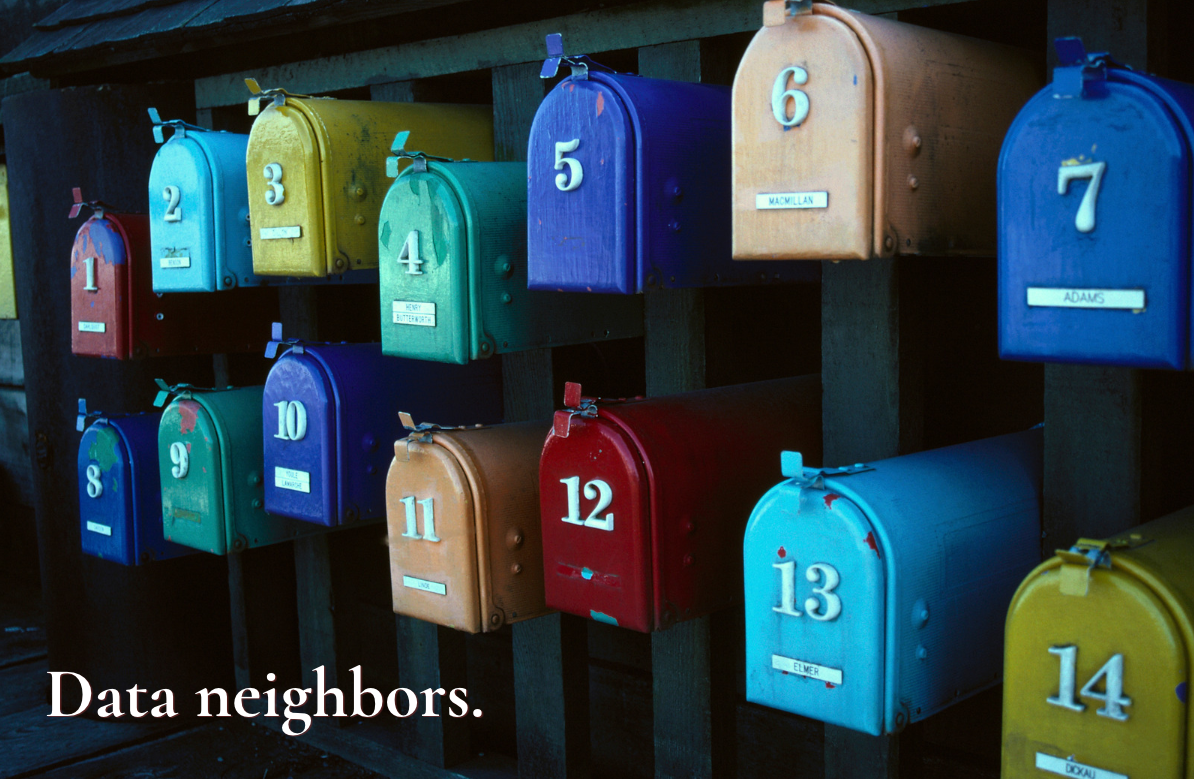
Algorithms can then utilize this vector in several ways. When prompted, Gemini explained that an algorithm could identify my “data neighbors”—individuals sharing highly similar life patterns, energy rhythms, and driving motivations. Clustering algorithms could also group my vector with others with similar profiles to uncover hidden archetypes, perhaps revealing whether I fit the description of “The Balanced, Screen-Heavy Thinker” (which I don’t). Furthermore, Gemini concluded, if my vector were combined with historical data, a model could potentially predict my optimal productivity hours or suggest personalized wellness intervals (Google, 2026b).
Turning myself into a vector illustrates how individual information becomes data, processed and interpreted by algorithms, while also showcasing the practical applications and implications of living in a data-driven world. This reality demonstrates why developing data literacy has become so important in higher education. With the current surge in global data, higher education institutions are under increasing pressure to teach data literacy, as both instruction and research have become deeply data-centric. Consequently, as Kim et al. (2025) argue, equipping students with these skills is crucial for their career readiness, especially since modern, AI-integrated workplaces increasingly view data literacy as a desired professional asset.
Indeed, we inhabit a “datafied” society, where public and private organizations continuously track, profile, categorize, and “score” individuals (Hintz et al., 2023, p. 3549). Additionally, using data to make decisions often creates an illusion of objectivity. However, big data and automated systems, despite being framed as objective, frequently codify existing biases and inequalities and, in doing so, distance decision-makers from the communities they impact (Lehto et al., 2025). The Federal Trade Commission (2016) offers several examples of how big data can codify these biases. One that stands out is how a company can train a hiring algorithm on records of its past and existing employees to identify “good” candidates. If the company historically hired most men, gender bias is codified in the hiring algorithm. This makes it even more urgent that we enable our students to become data literate.
Data literacy is generally understood as the capacity to interpret and apply data to guide decision-making. As Mandinach & Gummer (2013) explain, for educators, this involves a specific combination of skills and knowledge that enables them to convert raw data into meaningful insights and, ultimately, into practical strategies in the classroom. More comprehensively, it is the continuous, effective, and ethical capacity to access, interpret, and communicate data to improve community outcomes.
As unlikely as it may seem, college writing can teach data literacy; it can serve as an interdisciplinary space that turns students from passive data consumers into agents of change. Writing serves as a bridge between STEM fields and the humanities, linking data collection and analysis with ethical interpretation and civic communication (Phillips et al., 2024). Writing is especially positioned to explore, connect, and uncover power dynamics and structures that exist but are not visible when data is presented in isolation.
However, traditional academic writing often falls short in its engagement with data due to several limitations. It often involves passive reporting, where data is merely used to support a pre-existing thesis. In other words, we (used to) teach students to make a claim, find some data to support it, and call it a day. Additionally, there is the illusion of objectivity: quantitative evidence is typically treated as impersonal and neutral, yet this decontextualized reporting often fails to connect data to human lives (Phillips et al., 2024; Mandinach & Gummer, 2025). As a result, students miss the opportunity to see data as a living, human story rather than just an abstract set of numbers.
We can teach our students that presenting data is far from a neutral act; instead, it involves rhetorical and ethical choices. How a writer selects, crops, and frames statistical evidence can influence public perception and consequences (Mandinach & Gummer, 2025). Students need to be made aware of how important it is to resist the (artificial) separation between numbers and stories and instead do what Phillips et al. (2024) urge us to do — merge them to create a more complete narrative. This is “the missing link” that writing—especially writing across the curriculum—can offer.
Students therefore need to become more familiar with data ethics and its two-pillared framework: transparency and consequences. Mandinach & Gummer (2025) explain that transparency involves making the data generation, collection, and analysis explicit, explainable, and clear to all stakeholders, while consequences entail anticipating and evaluating both the intended and unintended harms, risks, and benefits of a data-informed decision. Mastering this dual framework ensures that students do not just process numbers, but actively evaluate the real-world impact of their choices.
Additionally, data ethics reminds us that data represent lives, relationships, and lived moments. Using five principles, Phillips et al. (2024) offer useful practical guidance on how to ethically “story” and use data:
Positionality: Locating oneself and one’s connection to place and power.
Values: Clarifying the motivations behind one’s data use.
Presence: Remaining awake and attentive to human contexts.
Representation: Re-presenting others’ lived experiences with care.
Form: Choosing accessible media for the audience.
These principles can transform college writing into a toolkit for change-making by data-literate, compassionate citizens, equipped to navigate this world critically, ethically, and effectively, moving beyond mere vectors and passive data consumers to becoming agents of positive change.
References
Federal Trade Commission. (2016). Big Data: A Tool for Inclusion or Exclusion? Understanding the Issues (FTC Report). https://www.ftc.gov/reports/big-data-tool-inclusion-or-exclusion-understanding-issues-ftc-report
Google (2026a). Gemini Enterprise (August 2026 version) [Large language model]. https://gemini.google.com
Google. (2026b, August 31). How can you turn me into numerical data? Ask me questions to find out [Generative AI chat]. Gemini Enterprise. https://gemini.google.com
Hintz, A., Dencik, L., Redden, J., & Treré, E. (2023, May 18). Civic participation in the datafied society: Introduction. International Journal of Communication,17, 3549-3561. https://ijoc.org/index.php/ijoc/article/view/21453/4188
Kim, J., Hong, L., & Yoon, A. (2025). University students’ self-assessment of data literacy: A validation study. PloS One, 20(4), e0322104. https://doi.org/10.1371/journal.pone.0322104
Lehto, I., Järvinen, K.-M., & Alastalo, M. (2025). Understanding ethics and agency in data-driven decision-making: A literature review. Scandinavian Journal of Information Systems, 37(2), 113–153. https://doi.org/10.17705/3SJIS/037.14
Mandinach, E. B., & Gummer, E. S. (2025). Shining light on ethical uses of data in education: Emerging importance. Teachers College Record, 127(2), 141–162. https://doi.org/10.1177/01614681251334784
Phillips, L. G., Hamid, M. O., Reyes, V., & Hardy, I. (2024). To give: Ethically storying data. Educational Review, 76(7), 1857–1874. https://doi.org/10.1080/00131911.2023.2293453
About the Author
Originally from Romania, Dr. Irina Negrea has lived in the United States for 30 years. She has taught at Lehigh University, New Jersey City University, and Shaw University. She is now a full-time faculty member of Purdue University Global’s Department of English and Rhetoric and Editor-in-Chief of The WACademic.




Leave a Reply