

By Lisa Teitler
This post uses the song “Harry Hood” by Phish as a lens for understanding what it means to glow together as active participants in collective effervescence. Relying on Small’s (1999) concept of musicking and Gabriel et al.’s (2019) framework of sacred connection, it draws a connection between a festival field lit with individual glowsticks and the quiet luminous spaces we share with others.
The first time I remember hearing Phish play “Harry Hood” was in Noblesville, Indiana, Deer Creek, closing out the first set for a breathtaking 14:37 minutes. While Phish has been playing this song every 4.7 Phish shows, feeling it live is a statistic that cannot be captured (PhishNet, 2026). Originally released on their A Live One album in 1995, the song tells the story of Harry Hood and Mr. Miner through a skeletal structure of simple, repeated lyrics.
What makes this song so special is that it was never performed in the studio or part of a studio album; in its purest and intended form, it remains a song for and of the people existing at live performances, each time played just a bit differently, beginning with, “Harry! Harry! Where do you go when the lights go out,” the middle a funky, feel good, life-affirming, transcendent, and awe-inspiring groove sharing gratitude for Mr. Miner, and ending with, “You can feel good about Hood” and sometimes “You can feel good” (Phish, 1995).
In 1996, a call-and-response ritual was born when the band sang, “Harry,” the crowd responded with “Hood.” This call and response erased the boundary between band and crowd, but the song transcended its own sense of perfection in 1997, at the Great Went Festival, when another ritual ignited as fans tossed their glowsticks and glow-necklaces into the summertime sky, illuminating the night with thousands of pink, yellow, orange, and green neon arcs. The sky became a place to groove, the crowd responding to the band, and the band to the crowd, with an unfiltered joy and collective awe as they became one: fans, band, sky, ground, dancing, music: effervescence of light, love, and unlimiting togetherness.
What takes place when Phish plays “Harry Hood” is not just a song, it’s not just a jam, but a movement, a togetherness, a verb: the band musics.
Small (1999) beautifully captures this shift by introducing the verb “to music:”
And if musicking is action and not thing, verb and not noun, then we should look for its meaning not in those musical objects, those symphonies and concertos and operas, or even in those melodies and songs, that we have been taught to regard as the repositories of musical meaning. You will understand that I am not trying to deny the existence of those music objects, which would be silly, or to deny that they have meanings in themselves. But those meanings exist only in performance and are part, but only part, of the meaning of the performance as a whole. (p. 13)
Small encourages the reader to consider not asking what the meaning of a musical work is, but rather “what does it mean when this performance takes place at this time, in this place, with these people taking part?” (p. 13). The band embodies this approach: Del Gandio (2022) notes that while time is spent drafting setlists, writing and rewriting the order of songs, before a show, the band humbly walks onto the stage and allows “the audience’s vibes to guide them” (para. 24), honoring the living, breathing relationship between band and fans. Small eventually answers the question: “I mean that when we music, we take part in a musical act, the relationships that we bring into existence model those of the cosmos as we believe they are and ought to be. We do not just learn about those relationships, but we actually experience them in all their wonderful complexity” (p. 13-14). Modeling the cosmic relationships is an invitation into the sacred, shared space that can “contribute to bringing participants beyond the world of their ordinary experience” (Pizarro et al., 2022, p.4).
To music is directly connected to other people, those who are also musicking at the same time. At a Phish show, it’s all about the groove, jam, smiles, and expressing one’s heart to fellow dancers as the sky shines and smiles back, but these wonderful complex moments also exist in the quiet moments in our days. Gabriel et al. (2019) explain that “simply being with others in a group event can bring a sense of connection and sacredness that can improve the quality of life” (p. 1). They add that “collective effervescence should not just be seen as an explanation for the power of rare, unusual, and intense collective events, but can also be used as a framework for understanding how any kind of small and/or common collective gathering may give meaning, a sense of connection, and joy to life” (p.1).
Collective effervescence is not reserved just for the festivals or summer skies. It bubbles whenever we gather.
The WACademic is one such gathering. It’s our gathering.
The blank pages belong to the people, and there is no assigned setlist or prompt. Each contributor to this blog embraces the quiet moment and writes, first in private, then releases for others to enjoy, learn from, and share. The act of writing can be challenging as we struggle to find the words and the sentence structure to carry an idea home to an intended audience or to one we may never meet but are still connected with. We bend to the thoughts, moving through the tension, and find our way with words that are kind enough to arrive and words that never will. This is the tension. This is our tension.
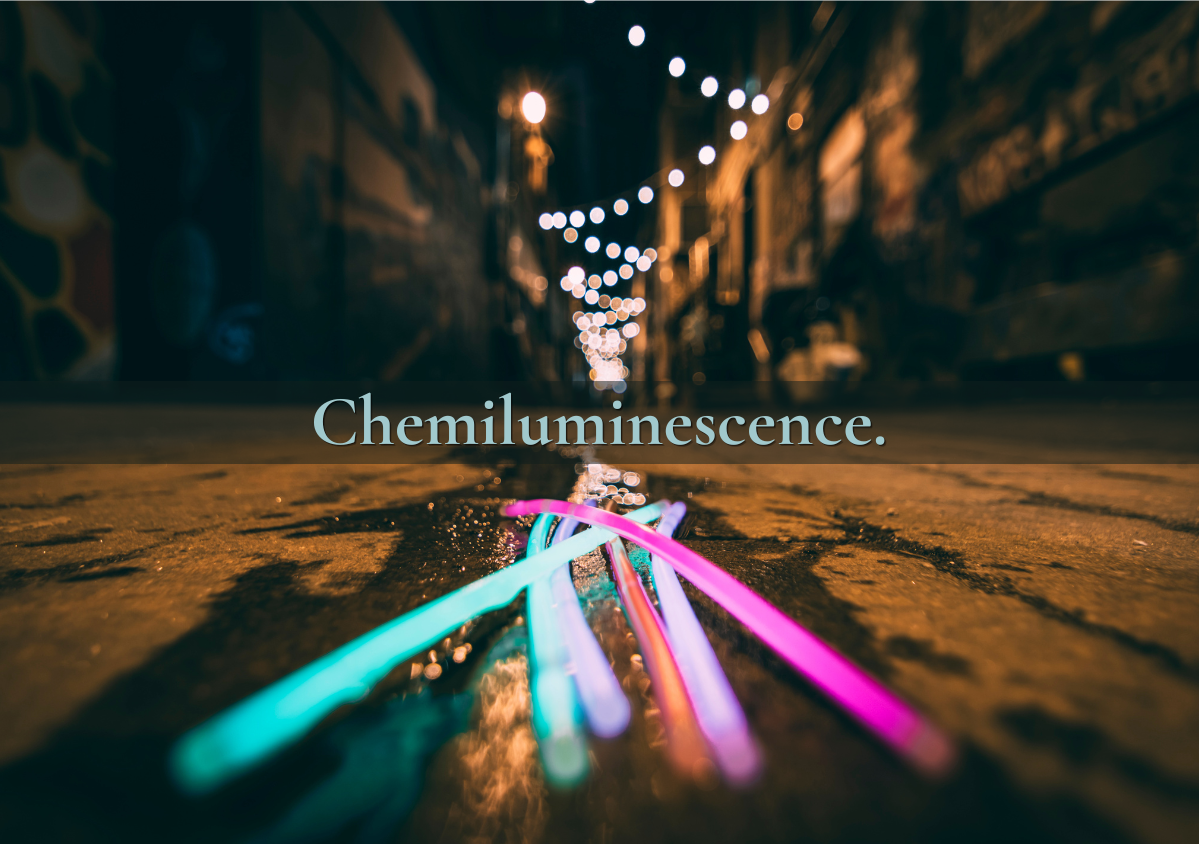
Chemiluminescence.
A glowstick contains two separate chemical solutions, each sealed and unable to produce light on its own. It is only in the tension, the bending of the glowstick, when the fragile inner vial breaks and the chemicals connect, that the light becomes possible (Temple Chemistry Demonstrated, 2024).
The glow happens in the connecting. The glow happens in the gathering.
And so we finish our writing. The seal in our internal glowstick breaks, and the shift from private to shared takes place. The writer calls. And the audience responds. The gift is in the sharing and togetherness, in the gathering and the connecting: the journey from quiet, private space to honored, celebrated, shared space.
Eventually, the song’s lyrics move from “Harry! Harry! Where do you go when the lights go out” into “Thank you Mr. Miner” and then finally melt into “You can feel good.” Thanking Mr. Miner is more than just a lyric repeated five times; it’s a pause and an emphasis on gratitude before reaching the truth the song has traveled roughly 15 minutes for: to feel good.
And so we gather. We thank. We pause and bend to the tension and find our way here with each other, the way a song travels to arrive at the feeling it always knew was waiting. We music. We write. We share our voices and ideas on the page: our ideas merging with other ideas, inspiring each other, written by different people, different hands, on different nights, with different colors and angles. Each blog entry is part of the call-and-response, a glowstick gently tossed into the shared sky, all of them creating a brighter light.
References
Del Gandio, J. (2022). Pulsating with love and light: A case study on Phish and the vibe. Public Philosophy Journal, 4(3). https://pubhub.lib.msu.edu/read/pulsating-with-love-and-light
Gabriel, S., Naidu, E., Parvati, E., Morrison, C.D., & Gainey, K. (2019). Creating the sacred from the profane: Collective effervescence and the everyday activities. Journal of Positive Psychology, 15(1), 1-26. https://doi.org/10.1080/17439760.2019.1689412
Phish. (1995). Harry Hood [Song]. On A live one. [Album]. Elektra.
PhishNet. (2026). Harry Hood. Mockingbird Foundation, Inc. https://phish.net/song/harry-hood
Pizarro, J. J., Zumeta, L. N., Bouchat, P., Włodarczyk, A., Rimé, B., Basabe, N., Amutio, A., & Páez, D. (2022). Emotional processes, collective behavior, and social movements: A meta-analytic review of collective effervescence outcomes during collective gatherings and demonstrations. Frontiers in Psychology, 13, https://doi.org/10.3389/fpsyg.2022.974683
Small, C. (1999). Musicking — the meanings of performing and listening. A lecture. Music Education Research, 1(1), 9–22. https://doi.org/10.1080/1461380990010102
Temple Chemistry Demonstrated. (2024, October 24). Chemiluminescence. Temple University. https://sites.temple.edu/chemdemo/2024/10/24/chemiluminescence/
About the Author
Lisa Teitler is a full-time faculty member in the English and Rhetoric department at Purdue University Global. She has taught writing for 18 years and loves the collaborative spirit. Delightfully and embarrassingly, she has seen over 100 Phish shows and is still traveling with her daughter to see them play.


Leave a Reply